
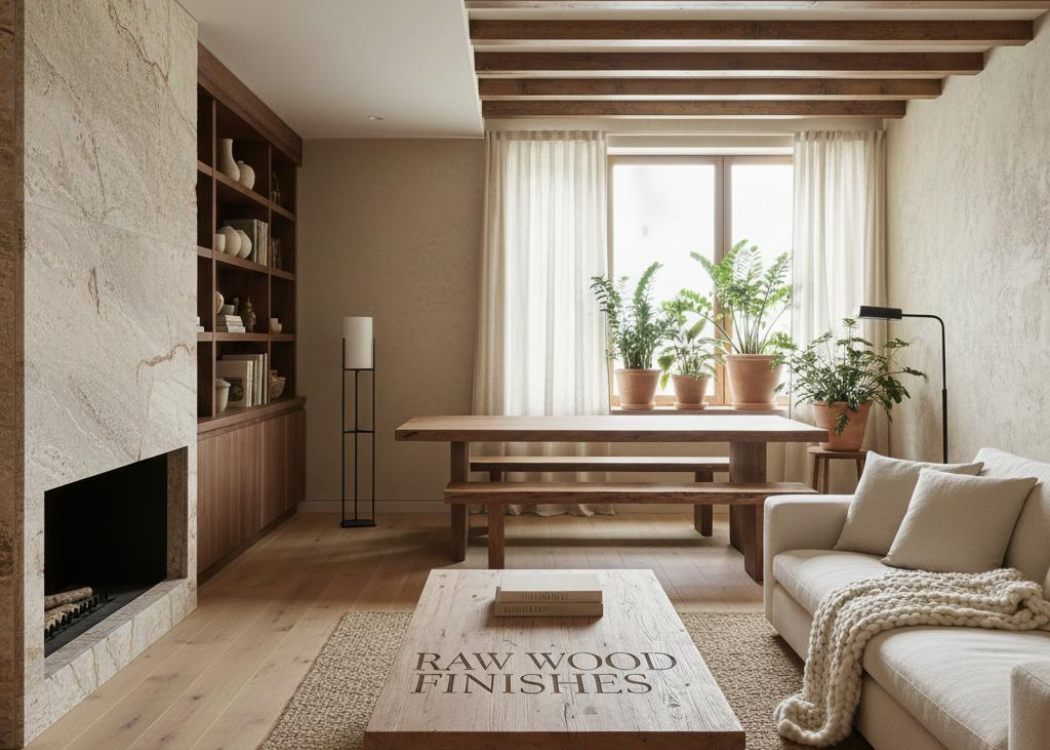
Interior design trends are constantly evolving, but the growing focus on natural materials marks a meaningful shift rather than a passing style. Today’s interiors are moving away from artificial finishes and toward materials that feel real, textured, and connected to nature. Wood, stone, clay, and natural fabrics are now central to modern home design because they create spaces that feel calm, balanced, and timeless.
This change reflects how people want their homes to function not just as visually appealing spaces, but as environments that support comfort, well-being, and long-term value. Natural materials have become a defining feature of contemporary interior design trends for this very reason.
The Growing Trends of Authentic Materials in Interiors Design
One of the most noticeable interior design trends is the return to materials in their most authentic form. Instead of glossy surfaces and synthetic textures, designers are choosing materials that show their natural grain, variation, and imperfections. These details add character and depth, making interiors feel lived-in rather than staged.
Natural materials also age well. Over time, wood develops patina, stone gains character, and natural fabrics soften, enhancing the overall look of a space rather than diminishing it.
1) Use of Wood in Contemporary Interior Design
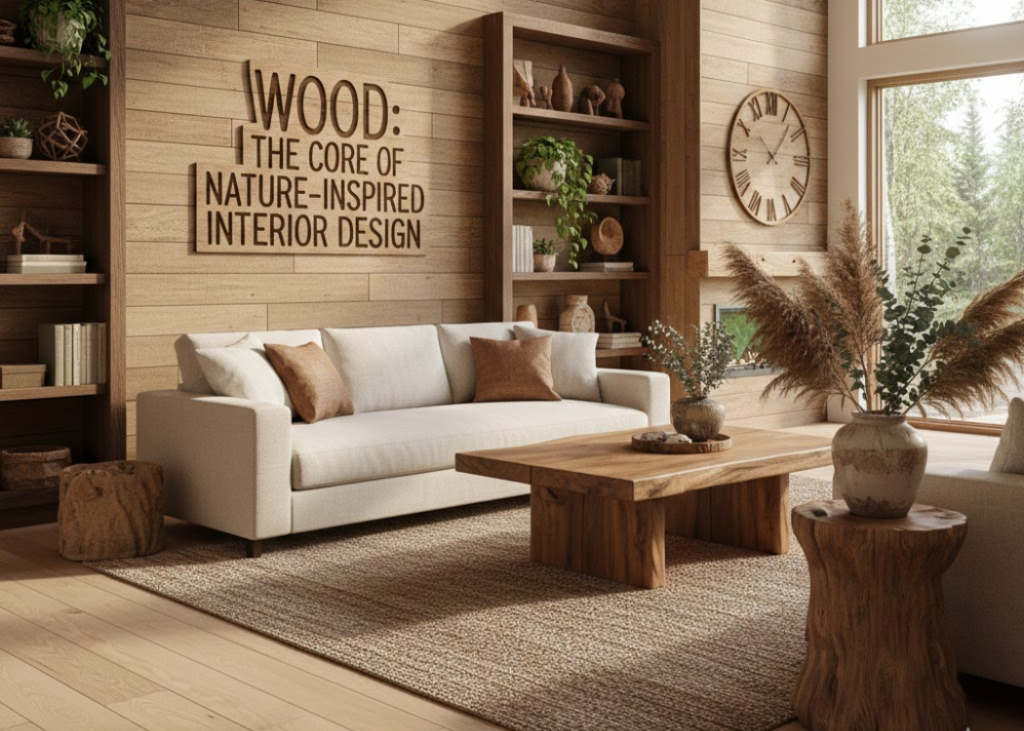
Wood remains one of the most versatile materials in interior design. From solid wood furniture and flooring to wall paneling and ceiling beams, it adds warmth and structure to any space. Popular choices include oak, teak, walnut, and reclaimed wood, each offering a unique tone and texture.
In current interior design trends, wood is often left minimally finished. This approach highlights the natural grain while maintaining durability, making wood suitable for both modern and traditional interiors.
Examples:
Open living rooms frequently feature oak or walnut wooden floors paired with neutral walls, creating a warm yet uncluttered atmosphere. Reclaimed wood is often used for dining tables, shelves, or feature walls, adding character and a sense of history to interior spaces. Wooden ceiling beams and slatted wood partitions are increasingly incorporated into modern homes to define areas without closing them off visually.
2) Stone and Earth-Based Materials in Interior Spaces
Stone has moved beyond luxury accents and is now a practical choice in everyday interiors. Materials such as marble, granite, limestone, slate, and terrazzo are used for countertops, flooring, accent walls, and bathrooms.
Natural stone brings strength and permanence to interior spaces. Its organic patterns ensure that no two surfaces look alike, which adds individuality to homes while reinforcing the connection to nature.
Examples:
Marble or granite countertops are commonly used in kitchens because they offer long-lasting durability while enhancing visual appeal. Limestone and slate flooring are often selected for entryways and bathrooms due to their textured and slip-resistant surfaces. Terrazzo is also returning to modern interiors, appearing in floors, staircases, and furniture surfaces as a balanced blend of tradition and contemporary design.
3) Natural Textures and Organic Wall Finishes
Wall treatments are playing a more expressive role in modern interiors. Clay plaster, lime plaster, and mineral-based finishes introduce soft texture and subtle movement to walls. These finishes reflect light gently and add visual interest without overwhelming the space.
Beyond aesthetics, natural wall finishes are valued for their breathable properties. They help regulate indoor humidity and contribute to healthier living environments, aligning with eco-friendly interior design principles.
Examples:
Living room feature walls finished with lime plaster create depth while maintaining a calm and understated look. Clay plaster is increasingly used in bedrooms to enhance comfort and promote a relaxed atmosphere. Hallways and staircases benefit from mineral-based wall finishes that add texture and character without relying on bold colors or decorative elements.
4) Earthy Colors and Nature-Inspired Palettes
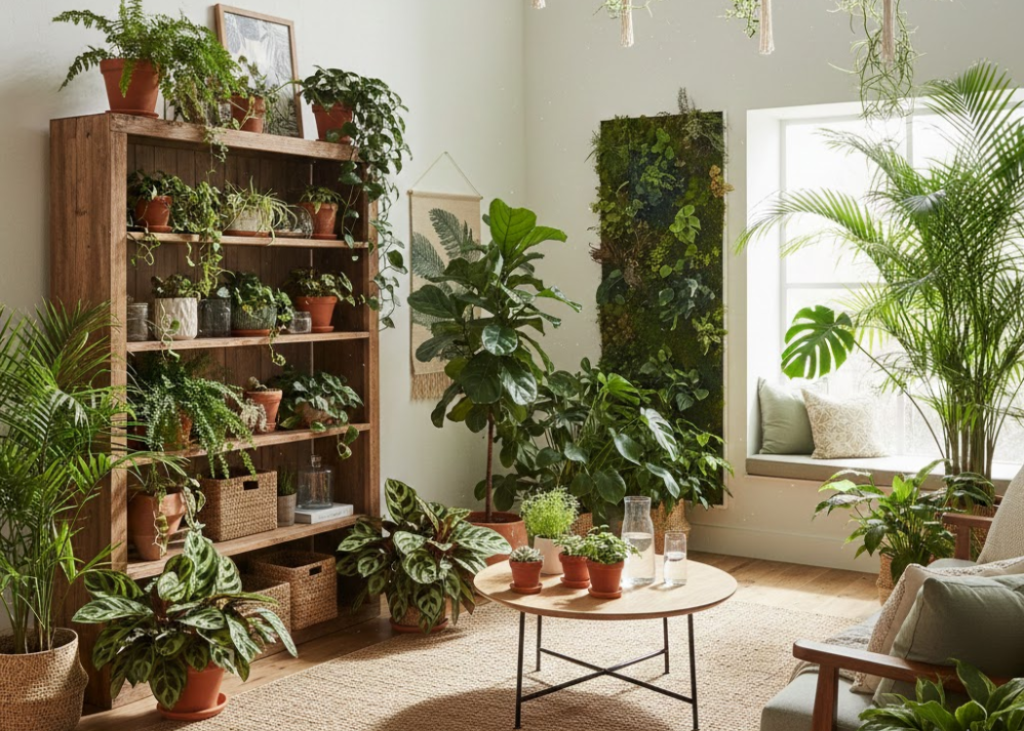
Color choices in natural interiors are inspired by landscapes found in nature. Shades like beige, sand, terracotta, clay, olive green, and muted grey are widely used because they feel grounding and timeless.
These earthy tones complement natural materials effortlessly and create a sense of visual continuity throughout the home. Unlike bold trend-driven colors, they remain relevant across changing interior design trends.
Examples:
Beige and sand tones are commonly used in living areas to enhance natural light and make spaces feel more open and inviting. Terracotta and clay shades are often introduced through accent walls, tiles, or décor elements to add warmth without overpowering the space. Olive green and muted grey are frequently used in bedrooms and study areas to create a calm and balanced environment.
5) Clay Materials That Add Depth and Timeless Appeal
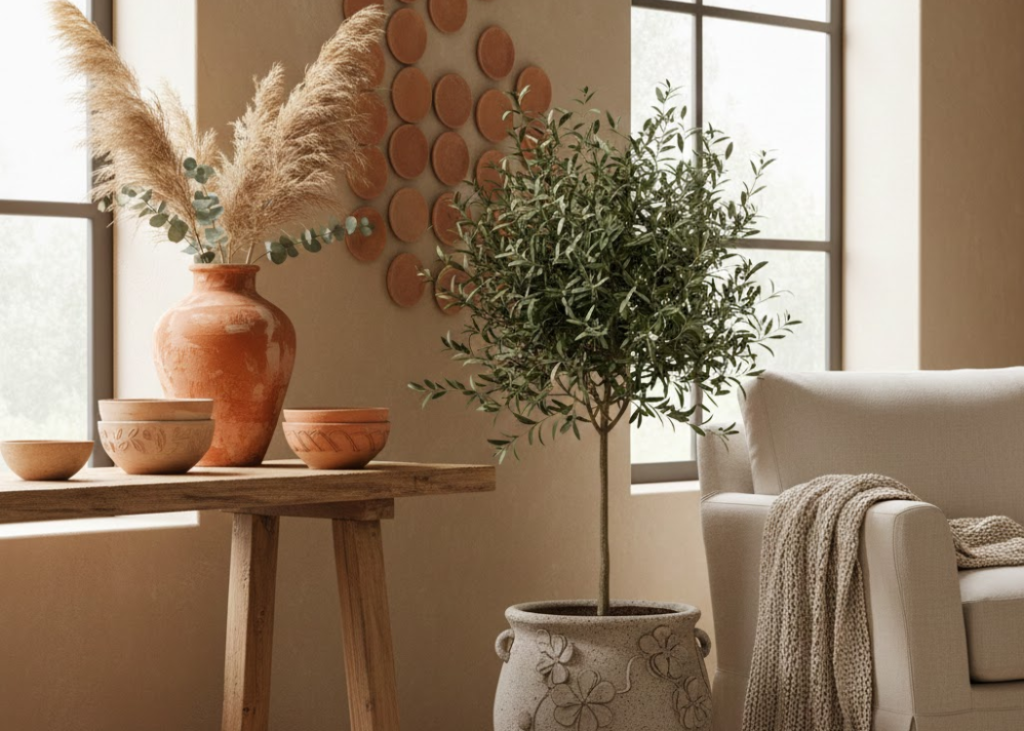
Clay materials are gaining renewed attention in interior design trends. Terracotta, lime plaster, and handmade ceramic surfaces are being used not only for floors but also for walls, countertops, and decorative accents.
Clay-based materials introduce softness and subtle color variations. These surfaces reflect light gently and make spaces feel grounded and calm. Their durability and timeless appearance also make them a long-term design choice rather than a passing trend.
Examples:
Terracotta tiles are widely used in kitchens, balconies, and indoor-outdoor transition areas because they add natural warmth and texture. Lime plaster walls in soft clay tones are commonly seen in living and dining spaces, where they provide visual depth without heavy decoration. Handmade ceramic tiles and pottery are often incorporated as backsplash accents or decorative elements to introduce artisanal detail.
6) Textiles That Feel Natural and Comfortable
Soft furnishings play a subtle yet important role in interiors inspired by natural materials. Linen, cotton, wool, jute, and silk are preferred over synthetic fabrics because they breathe better, age gracefully, and feel comfortable in everyday use.
Layering natural fabrics through curtains, rugs, cushions, and upholstery adds warmth without overwhelming the space. Texture becomes more important than patterns, keeping the overall look simple and refined.
Examples:
Linen curtains are frequently used to filter natural light while maintaining privacy and softness within a room. Wool and jute rugs add texture and comfort to living rooms and bedrooms while grounding the overall design. Cotton and linen upholstery in neutral shades allows furniture to blend naturally with wood, stone, and clay elements.
Why Natural Materials Matter in Interior Design Trends
Why Natural Materials Are Gaining Popularity
The rise of natural materials is closely linked to a growing awareness of sustainability and quality. Homeowners are prioritizing materials that last longer, require fewer replacements, and have a lower environmental impact.
Natural materials also offer transparency. Their origin, texture, and performance are easy to understand, which builds trust and supports informed design choices.
Why Natural Interiors Improve Comfort and Well-Being
Spaces designed with natural materials tend to feel calmer and more comfortable. Wood, stone, and natural fabrics create a sensory balance through texture, temperature, and color. These elements reduce visual noise and promote relaxation.
This connection between interior design and wellness has become a major reason why nature-inspired interiors are shaping modern interior design trends.
Why This Interior Design Trend Is Long-Term
Unlike short-lived décor styles, natural materials do not rely on novelty. Their appeal lies in familiarity and function. They work across architectural styles and adapt easily to evolving design preferences.
Because of this versatility, natural material-based interiors continue to remain relevant, making them a reliable choice for long-term home Interior design.
Conclusion
Interior design trends inspired by natural materials reflect a deeper shift toward thoughtful, sustainable living. By incorporating wood, stone, natural finishes, and earthy colors, interiors become more welcoming, durable, and emotionally engaging.
Rather than chasing fast-changing styles, natural materials provide a foundation for timeless design. They allow homes to feel personal, balanced, and connected to nature—qualities that ensure their lasting relevance in interior design.
FAQs:
1) What are the top interior design trends inspired by natural materials?
The most popular trends include the use of raw wood, natural stone, clay wall finishes, organic fabrics, and earthy color palettes that reflect nature.
2) Why are natural materials important in modern interior design?
Natural materials offer durability, aesthetic warmth, and sustainability. They also help create healthier and more comfortable indoor environments.
3) Which natural materials are most commonly used in interiors today?
Wood, stone, linen, wool, clay, bamboo, and jute are widely used due to their versatility and timeless appeal.
4) Are natural material interior design trends suitable for small homes?
Yes, natural materials work well in small spaces when used thoughtfully. Light wood tones, neutral colors, and textured finishes can make interiors feel more open and balanced.
5) Will natural materials remain a trend in the future?
Natural materials are expected to remain a core part of interior design because they align with long-term values such as sustainability, comfort, and timeless aesthetics.